Aldizkariari buruz
Euskera Ikerketa Aldizkariaren aurrekari gisa, Euskera Euskaltzaindiaren agerkari ofiziala izan da 1920. urtetik 2022ra bitartean. 2023tik aurrera bi argitalpen dira: batetik, Euskera Ikerketa Aldizkaria eta bestetik, Euskaltzaindiaren buletina. Lehenak Akademiaren lan esparruetako ikerketa-artikulu originalak, liburu-aipamenak eta antzekoak jasotzen ditu, eta paperean eta euskarri informatikoan argitaratzen da. Bigarrenak Euskaltzaindiaren lana eta bizitza akademikoa biltzen ditu eta modu elektronikoan argitaratzen da.
Euskera Ikerketa Aldizkariak bi zenbaki argitaratzen ditu urtero. Lehena, martxo edo apirila inguruan (urtarrila-ekaina aldiari dagokiona) eta bigarrena, irailean edo urrian (uztaila-abendua aldikoa). Ikerketa artikuluak argitaratzeko, Idazketa Batzordeak, anonimotasuna bermatuz, kanpo ebaluatzaileen iritzia jasoko du PEER REVIEW itsu bikoitza sistema erabiliz.
Uneko zenbakia
Euskera Ikerketa Aldizkaria 2026, 71, 1
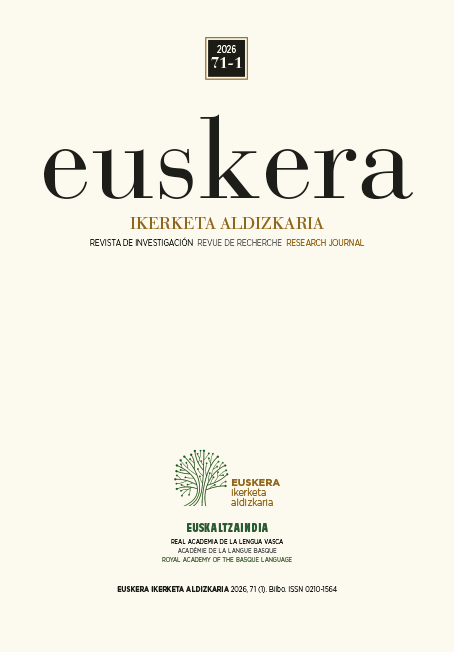
Askotarikoak dira, edukiz eta kopuruz, irakurle, zenbaki honetan aurkituko dituzun gaiak. Ikerketa artikuluetan, bi multzo egin daitezke. Lehenean, batetik, proposamen didaktiko bat aurkeztu da antzerkiaren bitartez adierazkortasun-baliabideak nola ikasi behar diren azaltzeko; bigarrenik, haur euskaldun elebakarren hizkuntza-jabekuntza aztertu da, morfema funtzional goiztiarrak deiturikoak eta, azkenik, hizkera akademikoaren oinarrizko trebetasunak definitzeko eta ezaugarriak ulertzeko marko teorikoa erakutsi da. Bigarren multzoan, berriz, elkarren ondoan dauden bi herritan, Goizuetan eta Leitzan, kokatutako bi lan eta euskal kulturgileei eta euskal idatzizko komunikabideei buruzko lan bat daude. Lehenean, nokaren erabilera ikertu da; bigarrenean, ahalera sintetikoa zenbait aditzetan nolakoa den aztertu da Leitzako euskaran; eta hirugarrenean, euskal kulturgileek Euskal Herriko idatzizko komunikabide digital batzuetan duten presentzia ikertu da.
Oharrak lau dira. Lehenean, Karmelo Etxenagusia ekarri nahi izan da gogora, eta gainerako hiruretan fonetika eta fonologiako gaiak landu dira: Hernaniko euskararen ahoskera aztertu da, hizkera-maila zaindu eta arduragabean ekoitzitako euskarazko bokalen azterketa akustikoa egin da eta, azkenik, Igeldoko euskararen bilakaera fonologikoa erakutsi da.
Azkenik, liburu-aipamenak bi izan dira. Lehenean, ingelesez, hizkuntzaz, politikaz eta lurraldeaz aritu da egilea eta, bigarrenean, gaztelaniaz, Antzinaroko sustrai indoeuroparreko Arabako eta Nafarroako sartaldeko jende izenak zein izan ziren jakiteko parada ematen da.
Argitaratua:
2026-04-30